
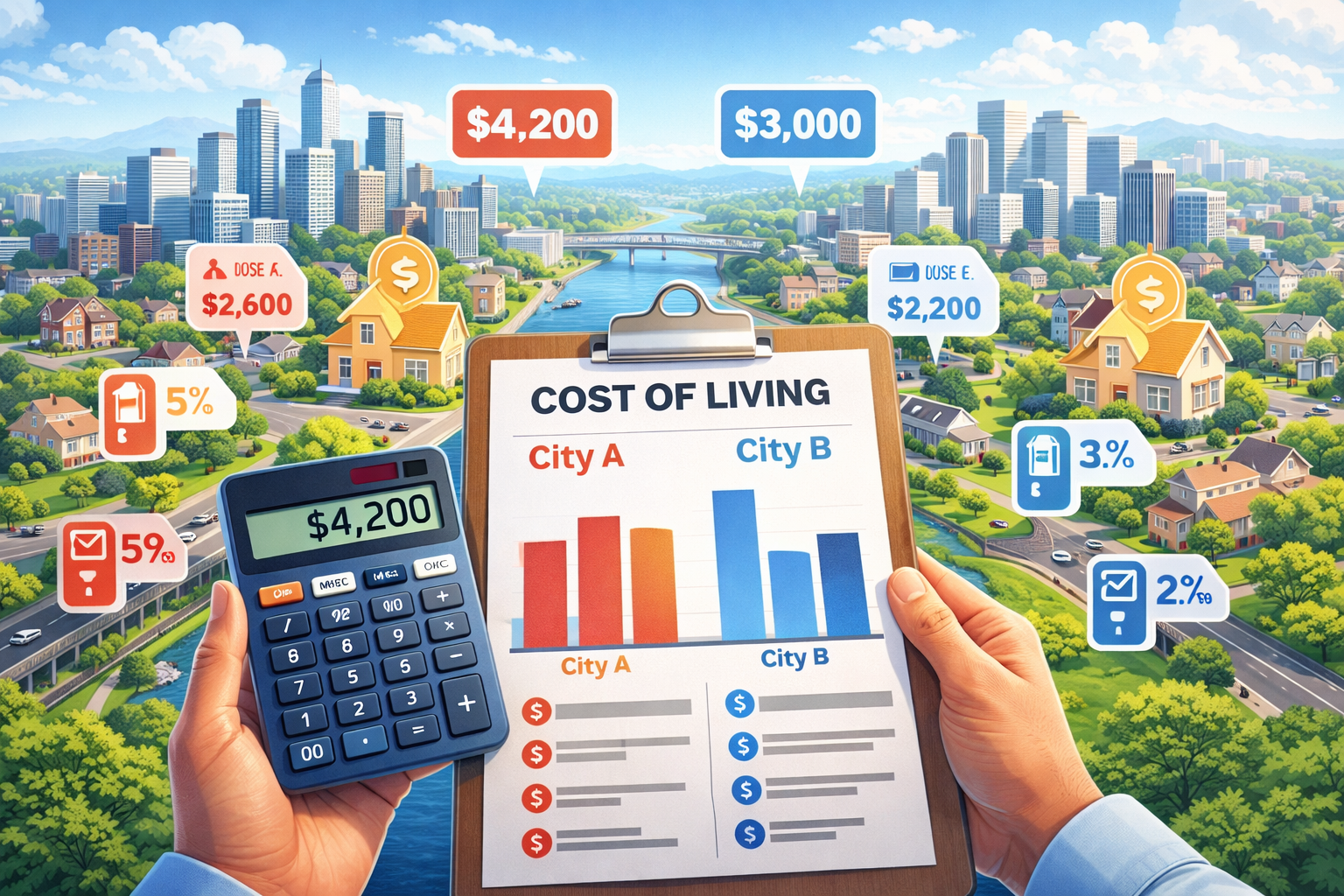
One of the biggest mistakes people make when relocating is assuming their current budget will work in a new city.
Housing is only one part of the equation. Taxes, utilities, insurance, transportation, and everyday expenses can change more than you expect.
Here’s how to compare cost of living the smart way.
Use this simple worksheet to compare two cities side by side as you research.
| Expense Category | City A | City B |
|---|---|---|
| Housing (rent or home price) | ||
| Property taxes | ||
| Utilities (electric, gas, water, trash) | ||
| Home & auto insurance | ||
| Transportation (gas, commute, parking) | ||
| Groceries and essentials | ||
| State income tax (if applicable) |
Filling this out often makes the financial differences between cities much clearer than looking at housing prices alone.
If you haven’t connected with a local real estate agent yet, this is usually the stage where many movers find it helpful to do so.
Start With Housing Costs
Look at:
- Average rent prices
- Average home prices
- Property taxes
- HOA fees if applicable
Housing usually makes up the largest part of your monthly expenses.
If you’re unsure whether renting or buying makes more sense in the new city, this guide can help you decide.
Compare Taxes and Insurance
Different states and cities have different:
- State income taxes
- Property tax rates
- Home and auto insurance costs
These can add hundreds of dollars to your monthly budget without you realizing it.
Evaluate Utility and Service Costs
Utilities vary by region due to climate and infrastructure.
Research average costs for:
- Electricity and gas
- Water and trash
- Internet services
You can review our utilities setup checklist to understand what services typically cost and when to schedule them.
You can also explore trusted service options for utilities, moving equipment, storage, and other relocation needs inside our Preferred Partners Directory.
Don’t Forget Transportation Costs
Ask:
- Will you need to drive more?
- Is public transportation available?
- How much is gas in that area?
- How long will your commute be?
Time and fuel both affect your real cost of living.
Use Trusted Consumer Financial Resources
Use trusted consumer financial tools to guide your budgeting and planning visit the Consumer Financial Protection Bureau for more information.
Connect Cost of Living Back to Your Relocation Budget
Understanding cost of living helps you build a realistic relocation budget.
How to Budget for a Relocation Without Surprises.
Final Thoughts
Relocation is easier when you know what life will actually cost in your new city.
Taking time to compare expenses now prevents financial stress later.