After relocating, updating your legal documents is an important step that many people delay.
However, your driver’s license, vehicle registration, and official records must reflect your new address to avoid fines, delays, or complications later.
Taking care of this early helps you fully transition into your new city without administrative issues.
If you haven’t connected with a local real estate agent yet, this is usually the stage where many movers find it helpful to do so.
Start With Your Driver’s License
Most states require you to update your driver’s license within a specific number of days after establishing residency.
Check your state’s Department of Motor Vehicles (DMV) website for:
- Required documents
- Appointment scheduling
- Fees
- Residency requirements
Bringing the correct paperwork the first time prevents repeat visits.
Update Your Vehicle Registration and Plates
If you brought a vehicle from another state, you will likely need to:
- Register the vehicle in your new state
- Transfer or replace license plates
- Update your vehicle title
- Pass any required inspections or emissions tests
These steps are often required before your registration is considered valid.
Gather the Documents You’ll Need
Most DMV visits require:
- Proof of identity
- Proof of residency (lease, utility bill, or mortgage document)
- Current driver’s license
- Vehicle title and insurance
This is similar to the document preparation you completed before your move.
Check Local Requirements for City or County Registration
Some cities and counties require additional vehicle or residency registration beyond the state DMV process.
Review your local government website to make sure no steps are missed.
Update Your Voter Registration and Legal Records
Once your address is updated with the DMV, you can update:
- Voter registration
- Insurance policies
- Employer records
- Banking and financial institutions
Handling these together saves time and prevents missed mail or verification issues.
Plan Your Visit During Low-Traffic Hours
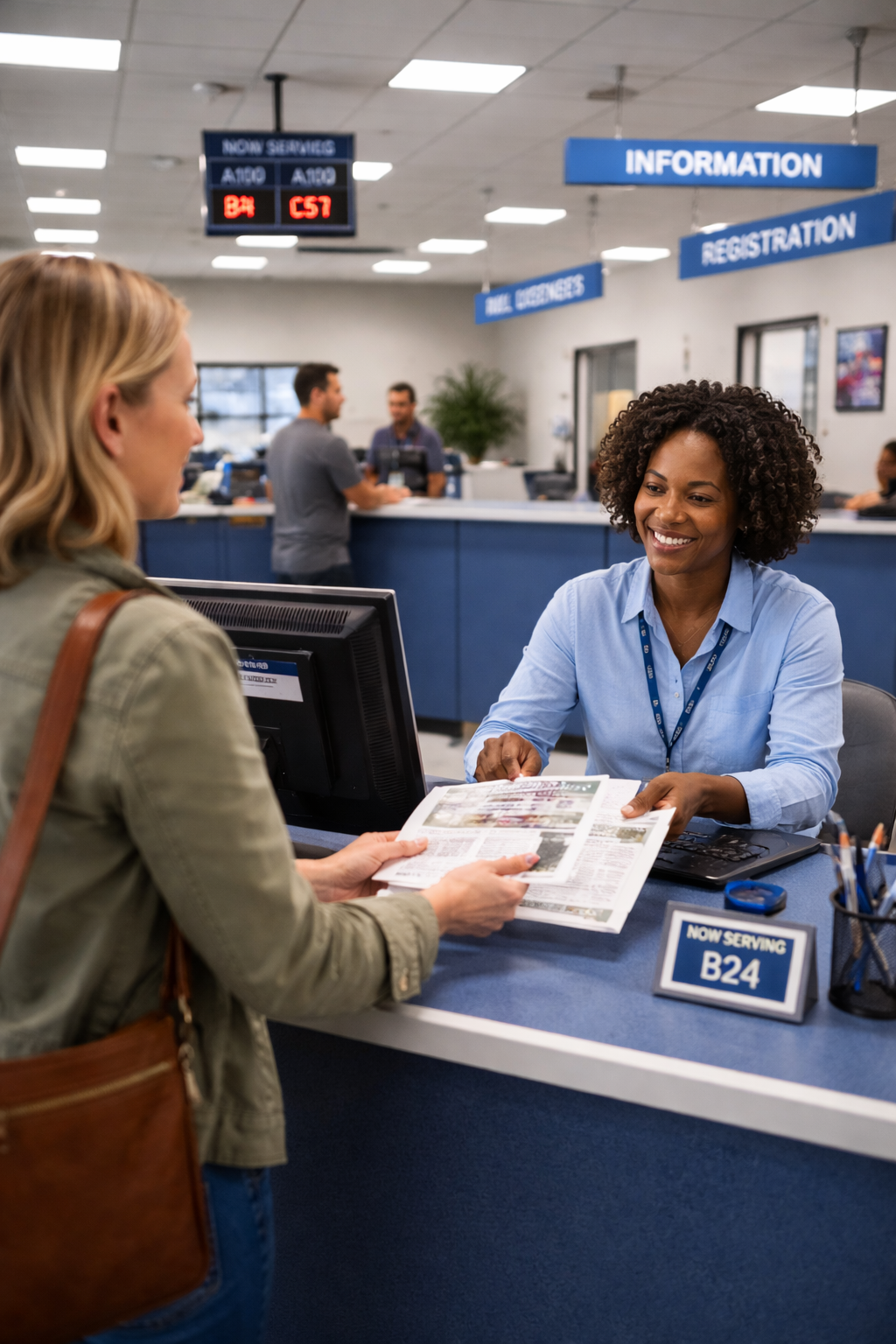
DMV offices can be busy depending on the time and day.
Planning your visit during mid-week mornings often reduces wait times.
This fits into the process of establishing new routines after relocating.
Don’t Delay This Step
Driving with an outdated license or registration can lead to fines if you are pulled over.
Completing this soon after arrival removes that risk and helps you feel fully settled in your new location.
You can approach this the same way you handled your first week after moving — one step at a time.
Use Trusted Consumer Resources While Planning
For additional consumer guidance during relocation planning, you can review resources from the Consumer Financial Protection Bureau.
Final Thoughts
Updating your legal documents may feel like a small task, but it plays a major role in fully transitioning to your new city.
Handling it early prevents problems later and helps you move forward with confidence.
If you haven’t spoken with a local agent yet, this can be a helpful time to connect with someone familiar with the area you’re considering.