After relocating, many people are surprised to learn that cities, neighborhoods, and HOAs often have rules that are very different from where they previously lived.
Trash pickup schedules, parking restrictions, noise ordinances, and permit requirements can all vary by location.
Learning these early helps you avoid fines, confusion, and frustration as you settle into your new home.
If you haven’t connected with a local real estate agent yet, this is usually the stage where many movers find it helpful to do so.
Start With Your City’s Official Website
Your city’s website is the best source for understanding local regulations.
Look for sections covering:
- Trash and recycling schedules
- Parking rules and permits
- Noise ordinances
- Pet regulations
- Property maintenance codes
This provides a reliable overview of how your city operates.
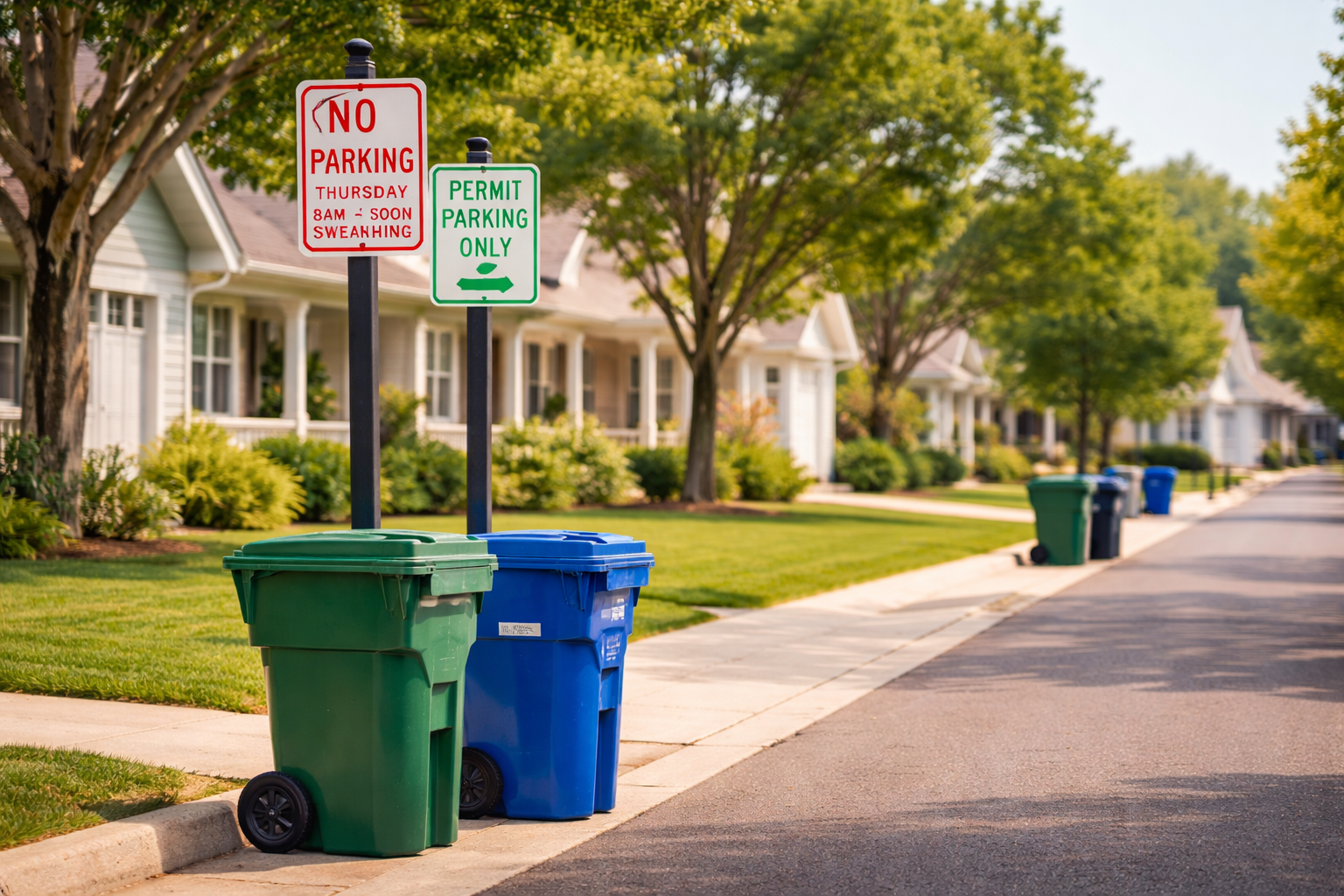
Understand Trash, Recycling, and Bulk Pickup Rules
Some cities require registration for trash service, specific bin placement, or special scheduling for large items.
This connects to setting up home services after relocating.
Learn Parking and Street Rules
Street parking, guest parking, and permit requirements often differ by neighborhood.
Knowing these rules early prevents tickets and misunderstandings.
This builds on how you learned your new neighborhood after moving.
Review HOA or Community Guidelines
If you live in a neighborhood with a homeowners association, review the guidelines carefully.
These may include rules for:
- Lawn care and landscaping
- Exterior home appearance
- Trash bin storage
- Guest parking
- Holiday decorations
Check Permit Requirements for Home Projects
Some cities require permits for:
- Installing fences
- Building decks
- Major landscaping
- Exterior renovations
Knowing this ahead of time prevents delays if you plan improvements.
Ask Neighbors for Practical Insight
Neighbors often know the day-to-day rules that aren’t obvious online.
This connects to meeting people and building community after relocating.
Keep a Simple Reference List
Write down key rules that apply to your home and neighborhood so you don’t have to search for them later.
This mirrors how you used checklists throughout your relocation process.
Use Trusted Consumer Resources While Planning
For additional consumer guidance during relocation planning, you can review resources from the Consumer Financial Protection Bureau.
Final Thoughts
Every city operates a little differently. Learning the local rules early helps you avoid unnecessary issues and feel more confident living in your new environment.
If you haven’t spoken with a local agent yet, this can be a helpful time to connect with someone familiar with the area you’re considering.