After moving into a new home, you quickly learn that every neighborhood has habits and expectations that aren’t written anywhere.
These are not city laws or HOA rules. They are everyday patterns that residents follow without thinking.
Learning these early helps you feel more comfortable and avoid small misunderstandings.
If you haven’t connected with a local real estate agent yet, this is usually the stage where many movers find it helpful to do so.
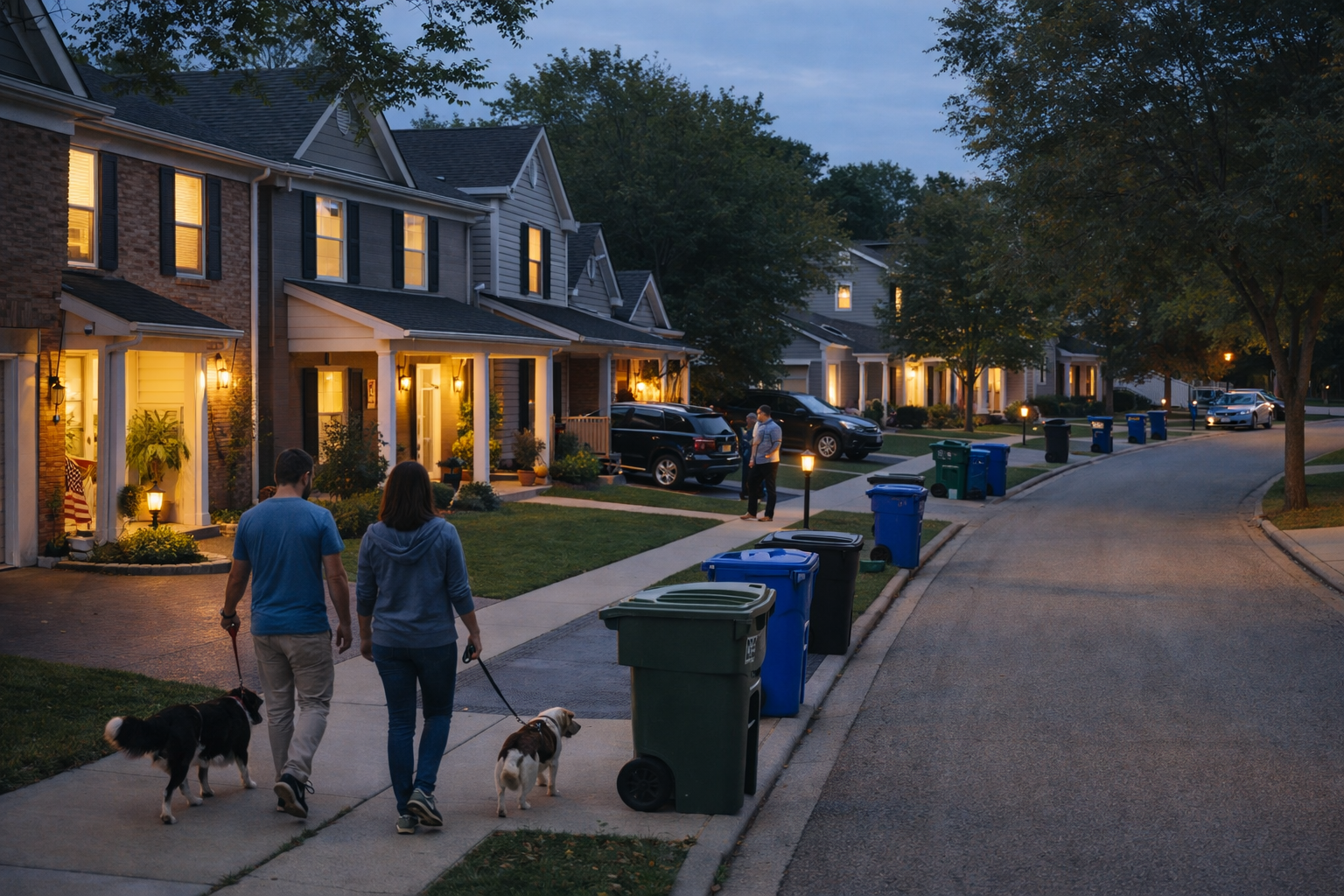
Observe Trash Day and Bin Placement
Pay attention to:
- What day trash and recycling are placed out
- Where neighbors place their bins
- How quickly bins are returned after pickup
This small detail helps you match the rhythm of the neighborhood.
This builds on how you learned your new neighborhood quickly after moving.
Notice Parking Habits
Some neighborhoods have unspoken expectations about:
- Where guests typically park
- Which spots are avoided out of courtesy
- How close people park to driveways and mailboxes
Following these patterns helps you avoid friction.
Pay Attention to Outdoor Activity Patterns
You may notice:
- When people walk pets
- When kids play outside
- When neighbors spend time in their yards
These patterns tell you when the neighborhood is most active and social.
Observe Lawn and Exterior Care Standards
Even without strict rules, neighborhoods often share similar expectations for:
- Lawn maintenance
- Exterior appearance
- Holiday decorations
- Porch lighting at night
Matching these standards helps your home feel like part of the community.
Learn How Neighbors Communicate
Some neighborhoods communicate through:
- Casual conversations outside
- Group messages or online pages
- Notes or signs for small announcements
Understanding this helps you stay informed.
This connects to meeting people and building community after relocating.
Watch How Deliveries and Packages Are Handled
Notice where neighbors receive deliveries and how visible packages are from the street.
This ties into handling deliveries safely after moving.
Use Trusted Consumer Resources While Planning
For additional consumer guidance during relocation planning, you can review resources from the Consumer Financial Protection Bureau.
Final Thoughts
Every neighborhood has a rhythm that residents follow naturally.
By observing these small patterns, you begin to feel more at home and connected to the people around you.
If you haven’t spoken with a local agent yet, this can be a helpful time to connect with someone familiar with the area you’re considering.