
Relocating for a new job is an exciting opportunity, but it also comes with added pressure.
Unlike other moves, job relocations often involve tight deadlines, unfamiliar workplaces, and balancing professional responsibilities while adjusting to a new city.
Planning ahead can help you transition smoothly without becoming overwhelmed.
If you haven’t connected with a local real estate agent yet, this is usually the stage where many movers find it helpful to do so.
Understand Your Relocation Timeline
Job relocations usually move faster than personal relocations.
Start by identifying important dates such as:
- Your first day of work
- Your move-in date
- Travel requirements
- School enrollment (if applicable)
- Time needed to unpack and settle in
A clear timeline helps reduce last-minute stress.
This builds on creating a structured moving plan.
Learn About the Area Around Your Workplace
Before committing to a neighborhood, spend time researching the area around your new job.
Consider:
- Average commute times
- Nearby restaurants and grocery stores
- Parking availability
- Public transportation
- Safety and convenience
This connects to evaluating neighborhoods before relocating.
Ask Your Employer About Relocation Benefits
Some employers offer relocation assistance that may include:
- Moving expense reimbursement
- Temporary housing
- Travel reimbursement
- Storage assistance
- Home buying or selling support
Understanding these benefits can significantly reduce relocation costs.
Establish a Work-Life Routine Early
Starting a new job while adjusting to a new city can feel exhausting.
Creating consistent routines outside of work helps you settle in faster.
Focus on:
- Regular sleep schedules
- Meal planning
- Exercise
- Personal downtime
This builds on establishing routines after relocating.
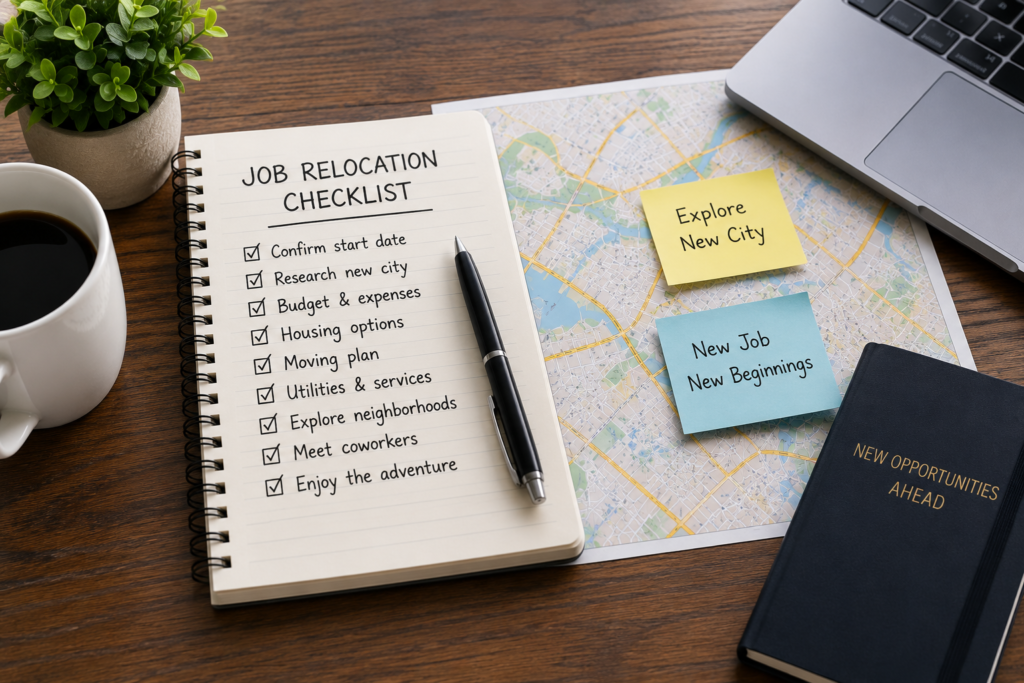
Explore the City Beyond Your Workplace
It can be tempting to spend all your time around the office.
Instead, make an effort to explore different neighborhoods, parks, restaurants, and attractions.
Doing so helps your new city feel like home rather than simply the place where you work.
This connects to getting familiar with your new city.
Consider Your Long-Term Plans
Once you’ve settled into your new position, think about whether the city supports your long-term personal and professional goals.
If you’re planning to stay, you may eventually begin considering homeownership.
Use Trusted Consumer Resources While Planning
For additional consumer guidance during relocation planning, you can review resources from the Consumer Financial Protection Bureau.
Final Thoughts
Relocating for a job is about more than accepting a new position—it’s about building a successful life in a new city.
With thoughtful planning and realistic expectations, you can reduce stress and focus on both your career and your personal well-being.
If you haven’t spoken with a local agent yet, this can be a helpful time to connect with someone familiar with the area you’re considering.