
Relocating is one of life’s biggest transitions—and it doesn’t matter if you’re moving across town or across the country. The process can be stressful, expensive, and confusing. But with the right preparation and support, moving becomes a streamlined experience instead of a chaotic one.
This guide breaks down the most important things every mover should know so you can relocate with confidence and avoid the most common mistakes.
If you haven’t connected with a local real estate agent yet, this is usually the stage where many movers find it helpful to do so.
For more relocation resources, timelines, and checklists, you can also explore our Relocation Education Center, which covers every stage of the moving process.
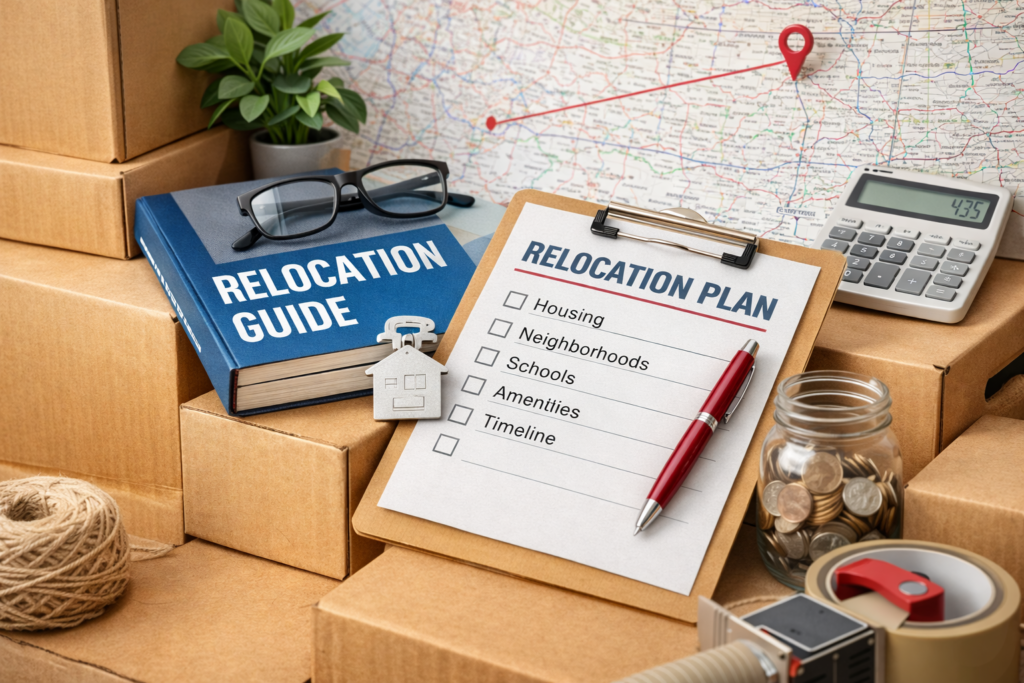
Helpful Relocation Guides
- Complete Moving Checklist: 30 / 14 / 7 / 1 Day Timeline
- Utilities Setup Checklist: A Practical Guide Before You Move
- The First 72 Hours After Move-In: Your Essential Move-In Checklist
- How to Budget for a Relocation Without Surprises
- How to Research a New City Before You Relocate
1. Start With the Big Three: Timeline, Budget & Location
Before diving into packing or hiring movers, clarify:
- When do you need to move?
- What is your ideal budget?
- What neighborhoods fit your lifestyle, commute, and goals?
This helps your future Realtor match you with the right homes from day one.
If you want a deeper breakdown of timelines, planning, and relocation strategy, you can review our Ultimate Guide to Relocating.
2. Get Matched With a Local Realtor Early
The biggest relocation mistake is waiting too long to get professional help.
A good Realtor will:
- Explain the market in your destination city
- Recommend areas that fit your goals
- Provide virtual tours
- Help you understand pricing trends
- Connect you with lenders and inspectors
Relocation Depot Group™ matches you with vetted, experienced agents nationwide—fast and free.
This is typically the point in the process where many movers choose to connect with a local agent who understands relocation.
3. Create a Moving Budget
Expenses to plan for:
- Movers or U-Haul
- First month’s rent / down payment
- Security deposits
- Travel
- Utility deposits
- Junk removal
- Temporary housing (if needed)
- Furniture and home setup costs
Most relocations cost more than expected—budgeting prevents surprises.
For general guidance on budgeting for major life transitions, the Consumer Financial Protection Bureau offers helpful resources.
4. Get Pre-Approved Early (If Buying)
In competitive markets, pre-approval is mandatory.
Benefits:
- Shows sellers you’re serious
- Helps narrow your price range
- Speeds up the entire process
5. Prepare for Moving Day
Create a checklist:
- Change address
- Schedule movers
- Transfer utilities
- Update driver’s license
- Forward mail
- Secure boxes & packing supplies
- Notate fragile items
- Keep essential documents with you
Conclusion
Relocating doesn’t have to be overwhelming. With the right planning—and the right Realtor—you can transition into your new home smoothly and confidently. Ready for a stress-free move?
Get matched with a trusted, licensed agent today.