Relocating to a new city is exciting. But choosing the wrong neighborhood can make a great city feel like the wrong place to live.
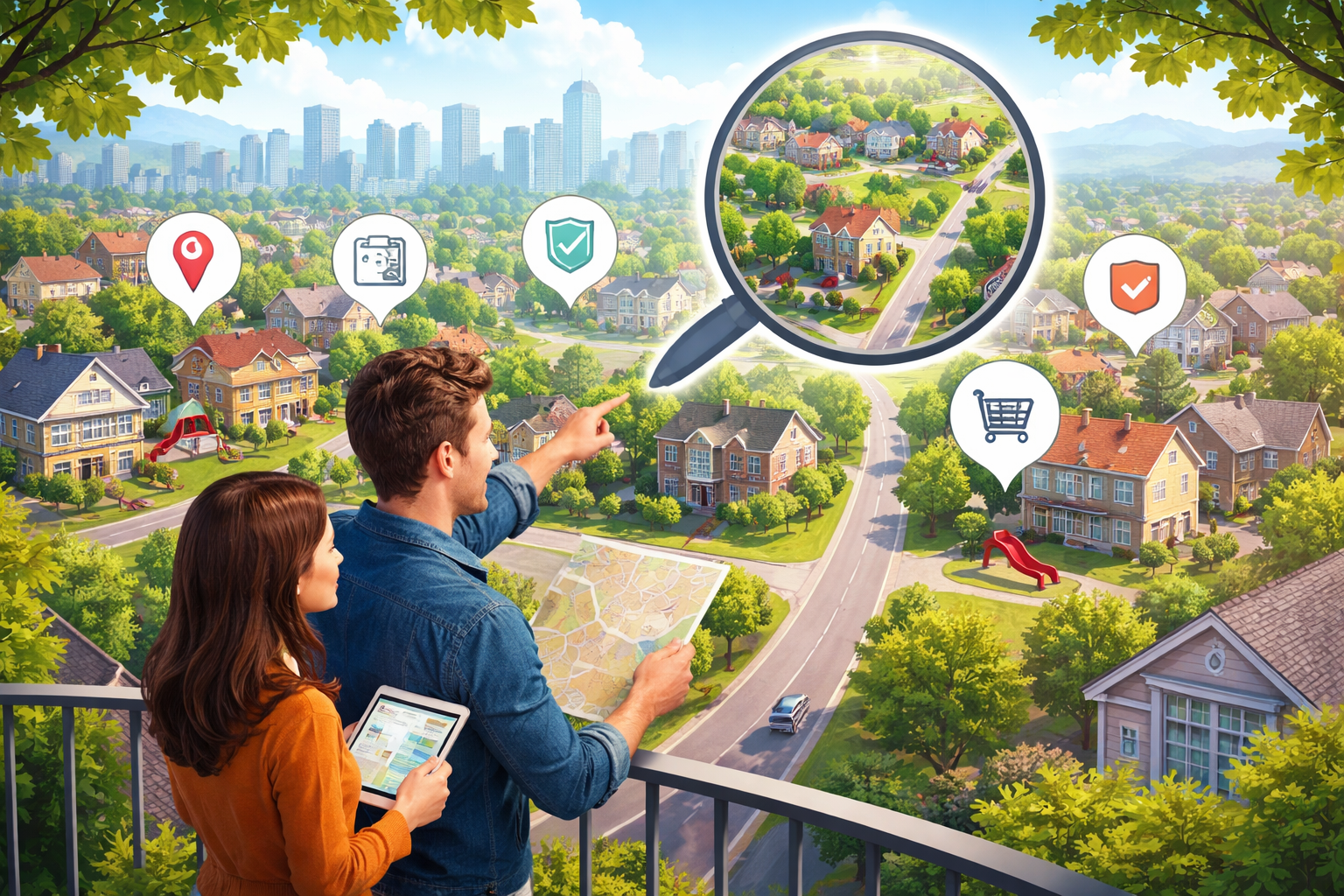
When you’re moving from a distance, you don’t have the luxury of driving around to get a feel for the area. You have to evaluate neighborhoods using tools, data, and smart questions.
Here’s how to do it the right way before you move.
If you haven’t connected with a local real estate agent yet, this is usually the stage where many movers find it helpful to do so.
Start With Your Daily Life, Not the Map
Before looking at neighborhoods, think about how you actually live.
Ask yourself:
- Do I want quiet or energy?
- Do I need to be close to work?
- Do I prefer walkability or driving?
- Do I want restaurants and stores nearby?
- Do schools matter for me?
- Do I want newer homes or established areas?
Your lifestyle should guide your neighborhood search — not just price or popularity.
Use Google Maps and Street View Like You’re Visiting
Google Maps is one of the most powerful relocation tools available.
Use it to:
- Check commute times during rush hour
- Look for grocery stores, parks, restaurants, and hospitals
- Walk the streets virtually with Street View
- Observe traffic, sidewalks, and how homes are maintained
You can learn a lot about a neighborhood just by walking it online.
Check Safety, Schools, and Amenities
Even if you don’t have children, school zones often affect property values and neighborhood stability.
Research:
- Local school ratings
- Crime maps and public safety reports
- Parks and recreation areas
- Public transportation access
This gives you a clearer picture of daily life in the area.
Red Flags to Watch for When Evaluating Neighborhoods
- Heavy traffic cut-through streets near the home
- Poor lighting or limited sidewalks in key areas
- Lots of vacant homes or neglected properties nearby
- Frequent noise sources (highways, trains, nightlife zones)
- Limited access to groceries, healthcare, or daily services
- Parking issues that would impact everyday life
- Long emergency response times (if available locally)
- HOA rules that conflict with your lifestyle (rentals, pets, etc.)
Compare Older Areas vs. New Developments
Older neighborhoods often offer mature trees, larger lots, and a strong community feel.
New developments often offer modern layouts, energy efficiency, and lower maintenance.
Neither is better. It depends on your preference.
Ask Your Realtor the Right Neighborhood Questions
A relocation-focused Realtor can give insight you can’t find online.
Ask them:
- Where do locals prefer to live?
- Which areas are improving quickly?
- Which neighborhoods match my lifestyle?
- What areas should I avoid based on your needs?
This is typically the point in the process where many movers choose to connect with a local agent who understands relocation.
What to Ask a Realtor Before Relocating to a New City.
Use Trusted Consumer Resources
Use data from trusted consumer resources to guide housing and financial decisions during your move visit the Consumer Financial Protection Bureau.
Connect Neighborhood Research Back to Your City Research
Evaluating neighborhoods is the next step after learning how to research a new city properly.
How to Research a New City Before You Relocate
Final Thoughts
The right neighborhood makes relocation feel successful from day one.
If you haven’t spoken with a local agent yet, this can be a helpful time to connect with someone familiar with the area you’re considering.