
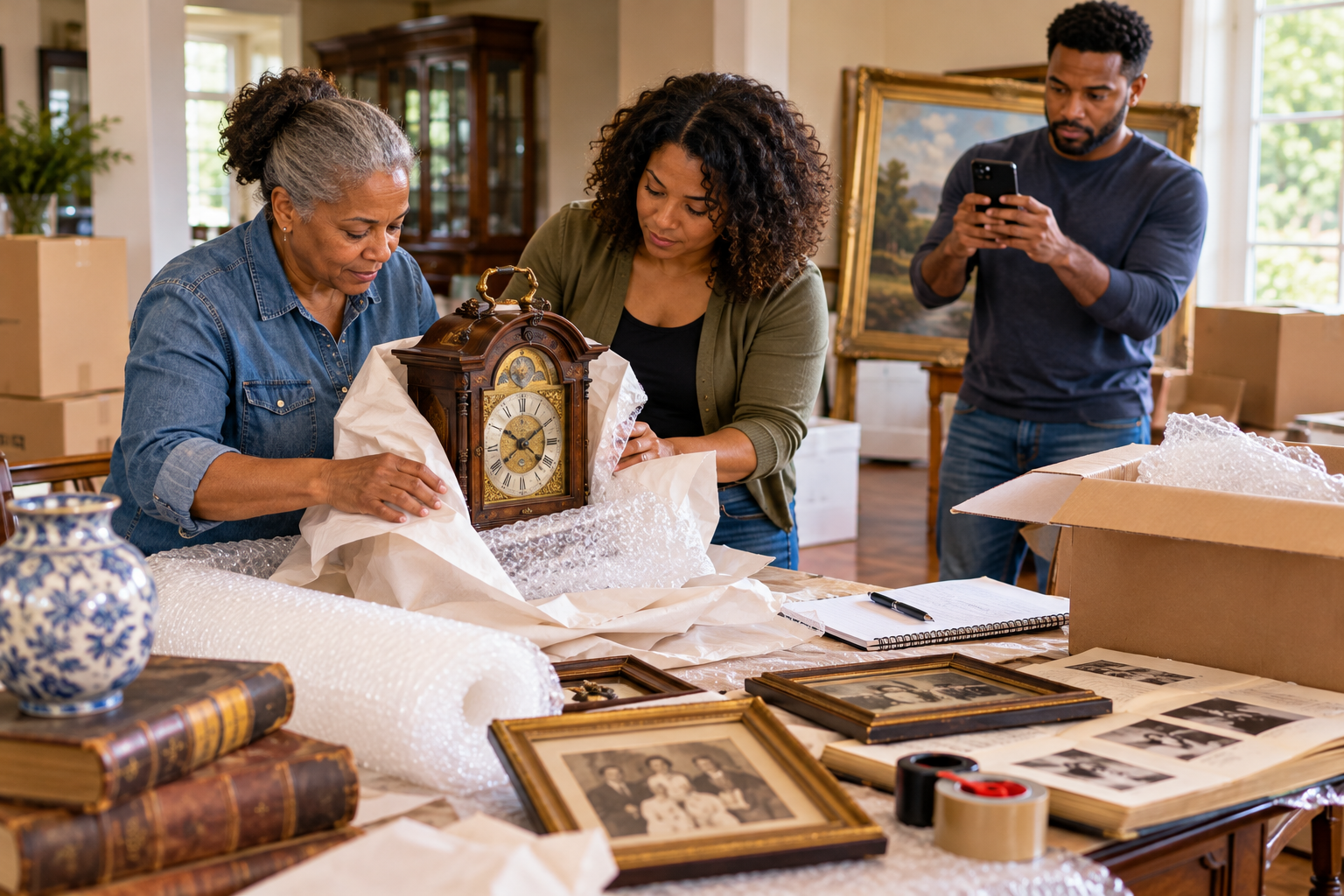
Some belongings are difficult to replace.
Others are impossible to replace.
A television damaged during a move can usually be replaced. A family photo album, inherited piece of furniture, original artwork, rare collectible, or heirloom passed down for generations is different. Its financial value may matter, but its sentimental value can be even greater.
That makes relocating with antiques, collectibles, and family heirlooms different from packing ordinary household goods.
The goal isn’t simply to get everything into a box. You need to decide what should travel with you, what requires professional handling, how items should be documented, and whether your insurance provides the protection you think it does.
A little extra planning before moving day can protect belongings that may have taken decades, or generations to acquire.
If you haven’t connected with a local real estate agent yet, this is usually the stage where many movers find it helpful to do so.
Start by Identifying What Actually Needs Special Handling
Not every valuable possession needs professional packing.
Before you begin, walk through your home and identify belongings that would be difficult, expensive, or impossible to replace.
That might include:
- Antiques
- Original artwork
- Family heirlooms
- Jewelry
- Coin or stamp collections
- Sports memorabilia
- Rare books
- Collectible toys
- Musical instruments
- Vintage furniture
- Porcelain or ceramics
- Family photographs
- Important historical documents
Don’t determine importance based solely on market value.
An old piece of furniture may be worth only a few hundred dollars to a buyer but be priceless to your family because it belonged to a grandparent.
Those are exactly the belongings that deserve additional attention during a relocation.
Create a Detailed Inventory Before Packing
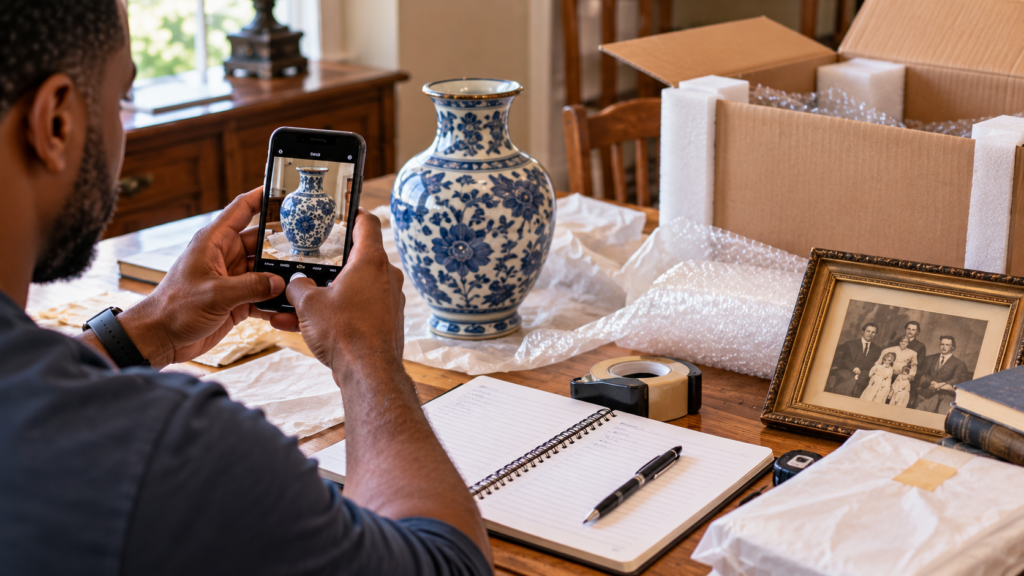
Document important possessions before anything goes into a box.
Depending on the item, record:
- A description
- Photographs
- Identifying marks
- Serial numbers when applicable
- Existing damage
- Purchase receipts when available
- Appraisals
- Ownership documentation
Take photographs from multiple angles for particularly important items.
Keep digital copies of the inventory somewhere you can access even if your computer or paperwork is packed.
Documentation won’t prevent damage or loss, but it can make it considerably easier to establish what you owned and its condition before the move.
Decide What Should Travel With You
Some possessions shouldn’t go onto a moving truck at all.
Consider personally transporting smaller items that are especially valuable, sentimental, fragile, or difficult to replace.
Examples might include:
- Jewelry
- Small heirlooms
- Important documents
- Irreplaceable photographs
- Small collectibles
Security matters too.
Don’t leave valuable items visible inside a parked vehicle during overnight stops, meals, or other breaks.
The right transportation decision depends on the item, its size, its value, and your ability to keep it secure throughout the trip.
Don’t Pack Valuable Items Like Ordinary Household Goods
A standard cardboard box and a few sheets of packing paper may be perfectly adequate for everyday kitchen items.
That doesn’t mean they’re appropriate for a 100-year-old vase.
Different belongings may require different materials and packing techniques, including:
- Specialty boxes
- Archival materials
- Protective wrapping
- Corner protection
- Custom crates
- Climate considerations
- Additional cushioning
Be particularly cautious with materials that can trap moisture, transfer ink, scratch finishes, or react with delicate surfaces.
If you don’t know how an antique or specialty item should be packed, getting professional advice before experimenting can be worthwhile.
Be Careful With Family Photographs and Documents
Photographs and documents deserve their own plan because some forms of damage cannot be reversed.
Keep original photographs, birth records, family documents, letters, and other irreplaceable paper items protected from:
- Moisture
- Extreme temperatures
- Crushing
- Bending
- Direct sunlight
Digitizing particularly important family photographs and documents before the move can also create a backup if something happens to the originals.
Your other important relocation documents should remain organized and accessible as well.
Consider Whether You Need an Appraisal
You may know that an item is valuable without knowing exactly what it’s worth.
An appraisal can be useful for certain antiques, artwork, jewelry, collectibles, or other high value property particularly when insurance coverage depends on establishing value.
However, don’t assume an old item is valuable simply because of its age.
Likewise, don’t assume something isn’t valuable because you originally paid very little for it.
If value matters for insurance or transportation decisions, consider obtaining an appraisal from an appropriately qualified professional.
Understand Your Moving Company’s Liability
This is one of the most important distinctions to understand.
A mover’s responsibility for your belongings is not necessarily the same thing as having insurance that will reimburse you for the full value of a valuable item.
For an interstate move, the Federal Motor Carrier Safety Administration (FMCSA) explains consumer protections and mover liability options, including the difference between Full Value Protection and Released Value Protection.
FMCSA — Protect Your Move: Understanding Valuation and Insurance Options
Review your mover’s documentation carefully and ask questions before signing.
If you’re transporting particularly valuable property, make sure you understand any limitations, exclusions, declaration requirements, or maximum values that may apply.
Review Your Homeowners or Renters Insurance
Don’t assume your homeowners or renters policy fully protects every collectible or heirloom during a move.
Certain categories of property may have coverage limits or special requirements.
Ask your insurer about:
- Coverage while belongings are in transit
- Limits for jewelry or collectibles
- Artwork
- Antiques
- High-value electronics
- Musical instruments
- Whether scheduled property coverage is appropriate
- Documentation or appraisal requirements
Do this before the move rather than after something has been damaged.
If moving expenses are also putting pressure on your household budget, the Consumer Financial Protection Bureau provides consumer resources covering budgeting, credit, debt, and other financial decisions.
Ask Movers About High-Value Items Before Moving Day
Don’t surprise the moving crew with a valuable antique after everything else has already been loaded.
Tell the company about unusual or high-value belongings when requesting estimates.
Ask:
- Will you transport this item?
- Does it require special packing?
- Is custom crating recommended?
- Are there additional charges?
- Does its value need to be declared?
- Are there coverage limitations?
- Will a specialty mover be necessary?
This also gives you time to compare alternatives if your regular household mover isn’t the right company for the job.
Consider Specialty Movers When Necessary
Some possessions deserve expertise beyond a standard household move.
Specialty movers may be appropriate for items such as:
- Fine art
- Pianos
- Large antiques
- Fragile sculptures
- Wine collections
- Oversized collectibles
- Particularly valuable furniture
Specialized service will usually cost more.
But the cheapest transportation option isn’t necessarily the least expensive option if improper handling destroys something that cannot be replaced.
Preferred Partners
You can also explore trusted service options for utilities, moving equipment, storage, and other relocation needs inside our Preferred Partners Directory.
Think Carefully Before Using Storage
Sometimes valuable belongings can’t go directly from one home to another.
If temporary storage is necessary, consider whether the environment is appropriate for what you’re storing.
Questions may include:
- Is climate control necessary?
- How is the facility secured?
- Who can access the unit?
- Is insurance required?
- Are there restrictions on valuable property?
- How long will the items remain there?
Temperature and humidity can matter for artwork, photographs, wooden furniture, books, musical instruments, and other sensitive possessions.
Don’t select storage solely because it’s closest to your new home.
Know Where Valuable Items Are Going in the New Home
Planning shouldn’t end with transportation.
Before moving day, decide where particularly fragile or valuable items will go when they arrive.
You may not want an antique table sitting in the middle of a busy hallway while movers carry furniture around it.
Consider moving valuable pieces into their final locations after the heaviest furniture and boxes have been delivered.
If you’re still preparing your new home and establishing services, coordinate those activities with your move-in schedule.
Don’t Advertise What You’re Moving
Relocation can create unusual security vulnerabilities.
Boxes may be sitting in driveways. Garage doors may remain open. Movers, contractors, neighbors, and delivery workers may be coming and going.
Avoid labeling boxes with descriptions such as:
EXPENSIVE COINS
or
VALUABLE JEWELRY
Use an inventory system that makes sense to you without unnecessarily advertising what’s inside.
Similarly, be cautious about posting photographs of valuable collections or details about your moving schedule publicly on social media.
Check Everything as It Arrives
Don’t wait several weeks to inspect valuable belongings.
As items are delivered:
- Compare them with your inventory.
- Inspect their condition.
- Photograph any visible damage.
- Keep packaging if a claim may be necessary.
- Follow the mover’s claim procedures and deadlines.
Your pre-move photographs become particularly valuable at this stage because they establish the item’s previous condition.
Build Specialty Handling Into Your Moving Budget
Professional packing, appraisals, custom crates, specialty transportation, additional insurance coverage, and climate-controlled storage can increase moving costs.
Include those expenses when building your relocation budget instead of discovering them at the last minute.
Paying more to protect every ordinary possession wouldn’t make sense.
Paying more to appropriately protect the few belongings that truly require it may.
Final Thoughts
The most valuable thing you’re moving may not be the most expensive thing you own.
Sometimes it’s the dining table your family has gathered around for generations.
Sometimes it’s a collection you spent 20 years building.
Sometimes it’s a box of photographs that wouldn’t mean anything to anyone else but means everything to you.
Identify those belongings before moving day.
Document them. Decide how they should travel. Understand your mover’s liability. Review your insurance. Use specialty professionals when the situation warrants it, and keep irreplaceable items under your control whenever practical.
You can’t eliminate every risk involved in moving.
But you can make sure the belongings that matter most aren’t treated like just another box.
If you haven’t spoken with a local agent yet, this can be a helpful time to connect with someone familiar with the area you’re considering.