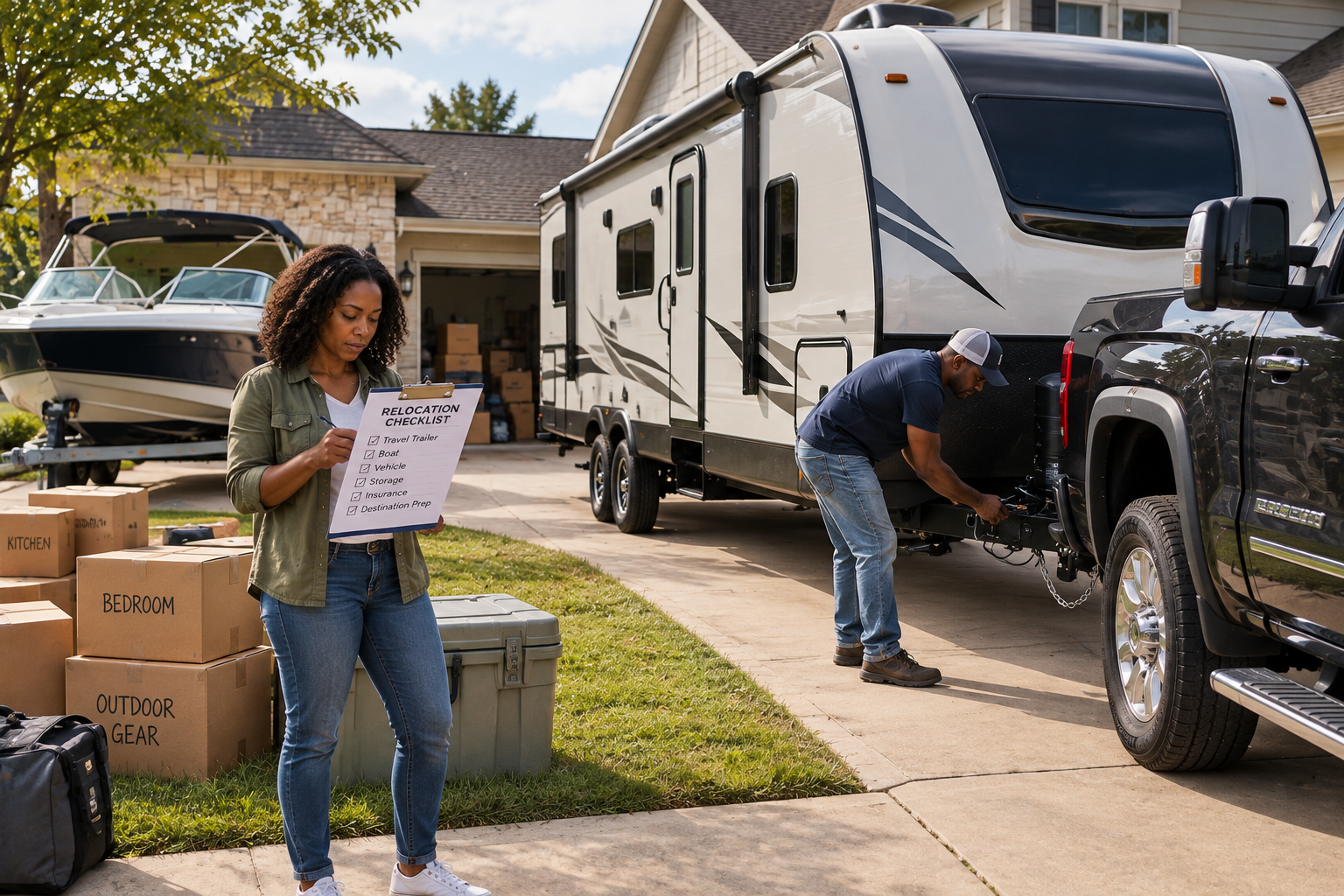
Relocating with a few cars is one thing. Moving a boat, recreational vehicle, travel trailer, or other large recreational equipment can add an entirely different layer to your relocation plan.
You aren’t simply figuring out how to get it from your old home to your new one.
You may need to think about towing capacity, transportation companies, route restrictions, insurance, storage, registration requirements, neighborhood rules, and whether your new property can accommodate what you’re bringing.
The earlier you answer those questions, the easier it becomes to make your boat, RV, or trailer part of the relocation plan instead of discovering a major problem after everything else is already scheduled.
If you haven’t connected with a local real estate agent yet, this is usually the stage where many movers find it helpful to do so.
Start by Deciding Whether It Should Make the Move
Before planning transportation, ask a basic question:
Does it still make sense to bring it?
Relocation can change how frequently you use recreational equipment.
A boat that made sense when you lived near a lake may get very little use at your new destination. An RV might become more useful after moving. A utility trailer may be valuable during the relocation itself but unnecessary afterward.
Consider:
- How often you currently use it
- Where you’ll use it after relocating
- Transportation costs
- Storage costs
- Maintenance expenses
- Registration and insurance costs
- Whether your new property has room for it
Don’t automatically sell something simply because it’s difficult to move.
But don’t spend thousands of dollars transporting and storing something without first deciding whether it still fits your lifestyle.
Determine Whether You’ll Tow, Drive, or Transport It
Once you’ve decided it’s coming with you, determine how it will get there.
Depending on what you own, your options might include:
- Driving the RV
- Towing the trailer yourself
- Towing the boat yourself
- Hiring a professional transporter
- Having the equipment delivered separately
- Temporarily storing it and moving it later
This decision should be made alongside the rest of your vehicle plan.
A household already coordinating several cars may discover that adding a truck pulling a boat or trailer makes the logistics significantly more complicated.
Make Sure Your Tow Vehicle Is Appropriate
If you plan to tow something yourself, don’t base the decision only on whether your vehicle has a hitch.
Your vehicle, hitch, trailer, and load need to be appropriate for one another.
Review the manufacturer’s specifications and applicable requirements involving factors such as:
- Towing capacity
- Payload
- Hitch rating
- Trailer weight
- Loaded weight
- Braking requirements
- Tire condition
- Lighting and connections
Remember that loading additional belongings into the tow vehicle or trailer can change the weight involved.
When you’re uncertain about the equipment or towing setup, consult an appropriate qualified professional rather than guessing.
Plan the Route Around What You’re Driving
The route you normally take in a car may not necessarily be the route you want to take while towing a large trailer or driving an RV.
Your trip may require additional consideration for:
- Low-clearance bridges
- Weight restrictions
- Steep grades
- Narrow roads
- Construction zones
- Tunnels
- Toll roads
- Fuel availability
- Parking
- Overnight stops
Know the approximate height, length, and weight of your setup before leaving.
A route that adds a few miles but better accommodates a large vehicle may be far easier than blindly following the shortest route suggested by a standard navigation app.
Think About Fuel Stops Before You Need Them
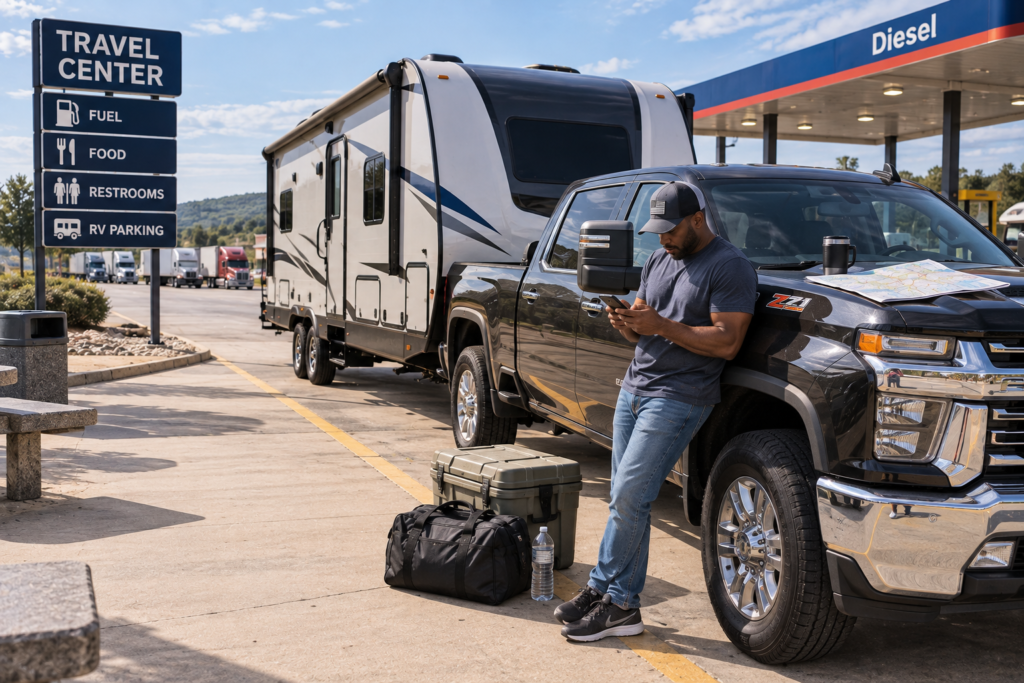
Fuel stops become more complicated when you’re pulling a long trailer or driving a large RV.
A gas station that’s easy to enter with a sedan may be difficult to navigate with a truck and 25-foot trailer behind it.
On a long-distance relocation, identify larger fuel stops along your route and avoid allowing the tank to get extremely low before searching for somewhere that can accommodate you.
The same applies to food and rest stops.
Think about where the entire vehicle combination can safely fit, not simply whether the destination has a parking lot.
Inspect Everything Before Leaving
A long relocation trip is not the ideal time to discover that something hasn’t been maintained.
Before departure, inspect the equipment appropriate to your particular setup.
That may include:
- Tires
- Spare tires
- Wheel bearings
- Brakes
- Lights
- Hitch components
- Safety chains
- Batteries
- Fluid levels
- Tie-downs
- Doors and compartments
For boats, make sure loose equipment is secured appropriately for transportation.
For RVs and trailers, check exterior compartments and anything inside that could shift during travel.
If the equipment has been sitting unused for an extended period, consider having it professionally inspected before a long-distance move.
Don’t Treat a Boat or RV Like Another Moving Box
It may be tempting to use every available space to transport household belongings.
Be careful.
Adding cargo changes weight and weight distribution. Items can also shift during transportation or damage the interior.
If you’re considering loading belongings into an RV, boat, or trailer, understand the equipment’s limitations and any restrictions that may apply.
Your household moving plan and your recreational-equipment transportation plan should complement each other not create additional risks.
Research Professional Transportation Carefully
If you’re not comfortable transporting the equipment yourself, professional transportation may be worth considering.
Get detailed quotes and understand what you’re paying for.
Ask potential transporters about:
- Experience transporting your type of equipment
- Pickup and delivery windows
- Insurance information
- Preparation requirements
- Size or weight limitations
- How delays are handled
- What documentation you’ll receive
- Whether additional equipment or permits may be required
Verify credentials and applicable operating authority when required.
Don’t choose solely on price. You’re handing someone a significant piece of property that may be worth tens of thousands of dollars.
Review Your Insurance Before the Move
Don’t assume your existing insurance automatically covers every situation involved in relocating a boat, RV, or trailer.
Contact your insurer and explain what you’re planning.
Ask about coverage while:
- Towing
- Driving
- Professionally transporting
- Temporarily storing
- Crossing state lines
If you’re hiring a transporter, understand what its coverage provides as well.
Keep insurance information accessible during the trip instead of packing it with your household belongings.
Research State Requirements Before Arriving
An interstate relocation can mean new requirements for your recreational equipment.
Depending on the state and equipment involved, you may need to research:
- Registration
- Titles
- Taxes or fees
- Inspections
- Insurance requirements
- Trailer requirements
- Boating requirements
Don’t assume the rules from your previous state carry over.
This is one reason researching your destination state’s laws before relocating is so important.
Use the appropriate state motor-vehicle, transportation, wildlife, boating, or other government agency to verify current requirements for your particular equipment.
Figure Out Where You’re Going to Put It
This might be the most overlooked part of the entire plan.
Where will the boat, RV, or trailer actually go when you arrive?
Your current home may have a large driveway or acreage. Your new property may not.
Before moving, investigate:
- Driveway dimensions
- Garage clearance
- Street-parking rules
- HOA restrictions
- Municipal ordinances
- Apartment or condominium restrictions
- RV storage facilities
- Boat-storage facilities
- Marinas
Don’t assume that because you own the property, you can store an RV or boat anywhere on it.
Local rules and private community restrictions can affect what is permitted.
RelocationDG already covers the broader process of learning local regulations after a move.
Research Storage Before Moving Day
If your new property can’t accommodate the equipment, find storage before you arrive.
For an RV or trailer, you might compare:
- Outdoor storage
- Covered storage
- Enclosed storage
- RV-specific facilities
For a boat, options may include:
- Marina slips
- Dry-stack storage
- Trailer storage
- Indoor or outdoor boat storage
Compare more than price.
Consider security, accessibility, operating hours, distance from your home, weather exposure, and whether the facility can accommodate the size of your equipment.
Waiting until you arrive could leave you searching for somewhere to put a 30-foot RV while it’s sitting in front of your new house.
Plan Overnight Stops Differently
A multi-day relocation may require different accommodations when you’re traveling with over sized equipment.
If you’re staying at a hotel, verify parking before booking.
Don’t assume a hotel with a large parking lot automatically allows trailers or RVs.
If you’re traveling in an RV, decide whether you’ll use campgrounds, RV parks, hotels, or another arrangement along the route.
Reservations may be worthwhile when you’re traveling during busy seasons or through popular destinations.
Keep Your Documents Accessible
Keep important documentation with you throughout the relocation.
Depending on what you’re transporting, that could include:
- Registration
- Title information when appropriate
- Insurance documents
- Transportation contracts
- Maintenance information
- Roadside-assistance information
- Reservations
- Applicable permits or other documentation
This is another reason your important relocation documents shouldn’t disappear into the moving truck.
Build the Extra Costs Into Your Relocation Budget
Moving over sized recreational equipment can create expenses that don’t appear in a normal moving estimate.
Your budget might need to include:
- Additional fuel
- Professional transportation
- Tolls
- Storage
- Campground or marina fees
- Maintenance before departure
- Registration and title fees
- Insurance changes
- Additional overnight accommodations
Don’t allow those costs to become an afterthought.
For broader consumer guidance on budgeting, managing debt, and making financial decisions, the Consumer Financial Protection Bureau provides educational resources for consumers.
Give Yourself More Time Than You Think You’ll Need
Moving with a boat, RV, or trailer usually reduces flexibility.
You may drive slower, fuel stops may take longer, parking requires more thought, and weather may affect the trip differently. As a result, a mechanical problem can become more complicated.
Avoid building a relocation schedule that depends on everything going perfectly.
Your overall moving timeline should leave enough room for the transportation challenges created by the equipment you’re bringing.
Final Thoughts
However, owning a boat, RV, or trailer doesn’t have to make relocating overwhelming.
It simply means that piece of your move deserves its own plan.
Decide whether it still fits your lifestyle, determine how you’ll transport it, verify your towing setup if you’re moving it yourself, research your route, understand insurance and registration requirements, and know exactly where it will be stored when you arrive.
Moreover, discovering that your new neighborhood bans RVs in driveways comes after you’ve driven across the country.
Research those details early, and your recreational equipment can become another organized part of the relocation instead of an unexpected complication.
If you haven’t spoken with a local agent yet, this can be a helpful time to connect with someone familiar with the area you’re considering.