
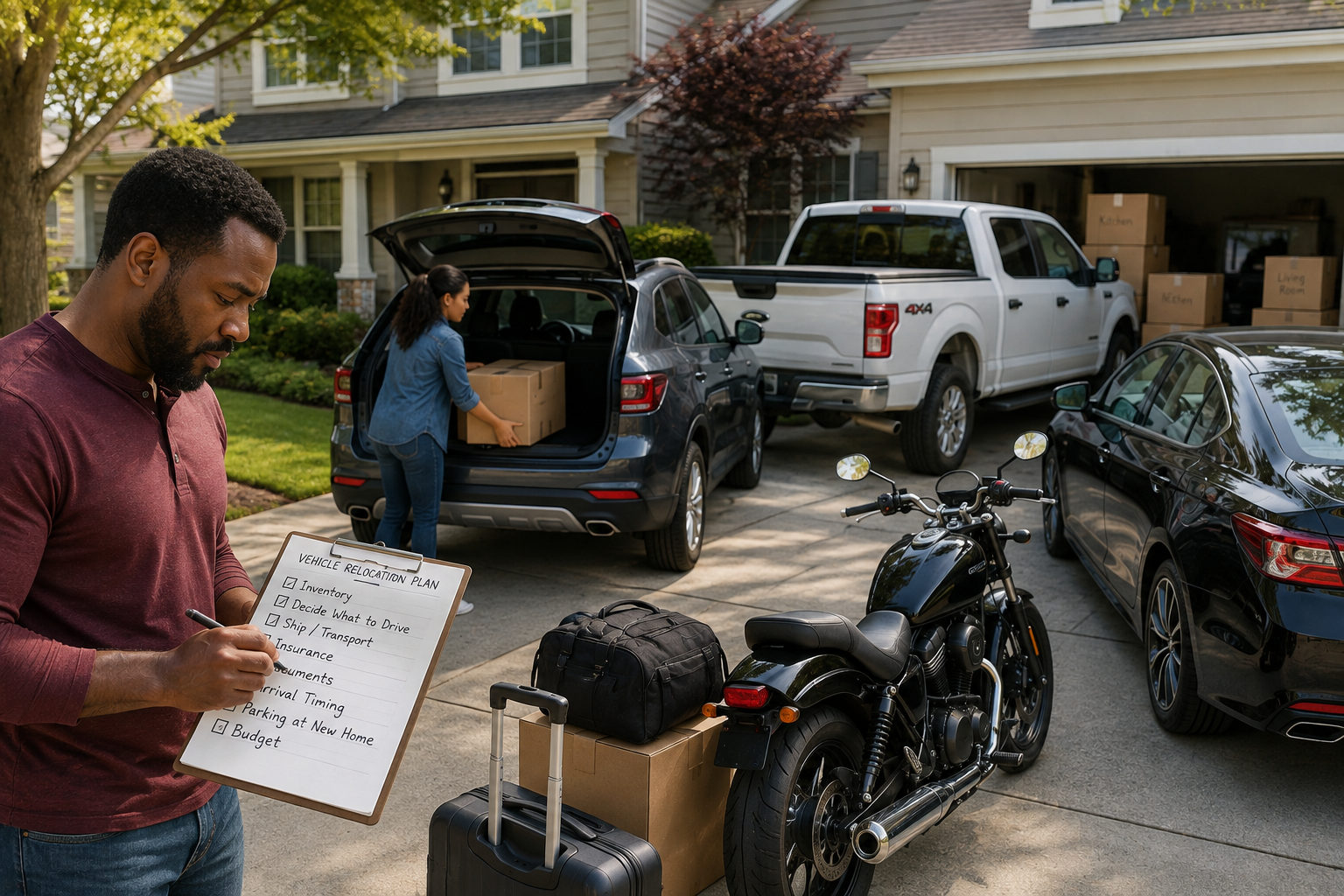
Moving one vehicle to a new city is usually straightforward. Moving three, four, or more can turn transportation into its own relocation project.
A household might own two daily drivers, a work truck, a motorcycle, a classic car, or another vehicle that still needs to reach the new home. When there are more vehicles than available drivers, simply deciding that everyone will drive to the destination may no longer work.
The good news is that you don’t necessarily have to move every vehicle the same way.
Creating a separate transportation plan for your vehicles can help you balance cost, convenience, timing, and the needs of your household.
If you haven’t connected with a local real estate agent yet, this is usually the stage where many movers find it helpful to do so.
Start With a Vehicle Inventory
Before deciding how anything will move, make a list of every vehicle your household owns.
Include:
- Cars
- SUVs
- Pickup trucks
- Motorcycles
- Classic or collectible vehicles
- Recreational vehicles that apply to your situation
For each one, consider its condition, value, current location, insurance coverage, and how frequently you’ll need it immediately after arriving.
You may quickly realize that some vehicles need to arrive with you while others don’t.
Compare the Number of Vehicles With Available Drivers
This is where a multiple-vehicle relocation becomes different from an ordinary move.
Imagine a two-driver household owns four vehicles.
You could potentially:
- Drive two and ship two
- Drive one and ship three
- Tow an appropriate vehicle where practical
- Have a trusted person drive another vehicle
- Move some vehicles at a later date
- Store a vehicle temporarily
There isn’t one correct answer.
The right combination depends on distance, cost, vehicle type, available drivers, timing, and how quickly you need each vehicle at the destination.
Decide Which Vehicles Make Sense to Drive
Start with the vehicles best suited for the trip.
Consider:
- Reliability
- Fuel economy
- Passenger space
- Cargo capacity
- Mileage
- Weather
- Length of the trip
- Whether children or pets will be traveling with you
Your largest vehicle isn’t automatically the best one to drive simply because it holds more belongings.
For a long-distance relocation, reliability and passenger comfort may matter much more.
Determine Whether Shipping Some Vehicles Makes Sense
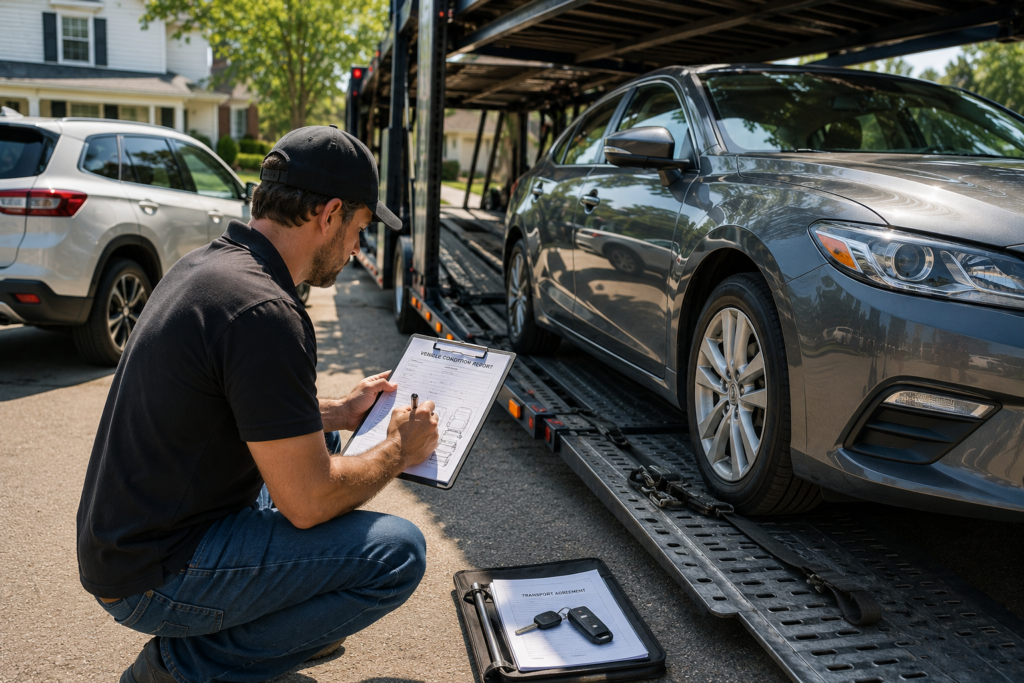
Professional auto transportation can solve the problem of having more vehicles than drivers.
When comparing transportation companies, research:
- Pickup and delivery windows
- Open versus enclosed transportation
- Insurance and liability information
- Vehicle condition documentation
- Cancellation policies
- Items permitted inside the vehicle
- Delivery procedures
Don’t select a company based solely on the lowest quote.
Understand exactly what service is being provided and what happens if pickup or delivery dates change.
Your vehicle transportation schedule should also fit into the larger timeline for your move.
Give Specialty Vehicles Their Own Plan
Not every vehicle should automatically be treated like a daily-use car.
A motorcycle, classic car, modified vehicle, oversized truck, or high-value vehicle may require different transportation considerations.
For example, you may care more about enclosed transportation for a collectible vehicle than for a daily commuter.
The important thing is to make the decision based on the individual vehicle rather than assuming one transportation method should be used for everything you own.
Calculate the Real Cost of Driving Versus Shipping
Driving may initially appear cheaper than shipping, but compare the complete cost.
A long-distance drive can include:
- Fuel
- Hotels
- Meals
- Tolls
- Parking
- Vehicle wear
- Additional mileage
- Time away from work
- A return flight if someone has to make a second trip
Shipping has its own costs, but it may save time and eliminate the need for multiple cross-country trips.
Compare the complete transportation plan rather than one expense at a time.
This is another reason your moving budget should include more than the cost of the moving company.
Think About What Happens if the Vehicles Arrive at Different Times
Your household goods, family members, and vehicles may not all arrive on the same day.
Ask yourself:
- Which vehicle do we need immediately?
- Can we function with one vehicle temporarily?
- Where will shipped vehicles be delivered?
- Does someone need to be present for delivery?
- Where will every vehicle be parked?
A little scheduling can prevent a situation where the vehicle you need most is still several states away.
Check Parking at Your New Home
This is easy to overlook.
Your current home may comfortably accommodate four vehicles, while your new home may have:
- A smaller driveway
- Limited garage space
- Street-parking restrictions
- Permit requirements
- HOA restrictions
- Apartment parking limits
Know where every vehicle will go before transporting all of them to the new address.
If your new community has local registration or resident requirements, research those early as well.
Keep Vehicle Documents Accessible
Don’t pack vehicle paperwork somewhere you can’t reach it.
Keep important documents organized, including:
- Registration
- Insurance information
- Titles when needed
- Transportation agreements
- Inspection records
- Driver information
- Emergency contact information
Take photos of each vehicle before turning it over to a transportation company and retain copies of relevant paperwork.
This fits naturally into organizing the important documents for your relocation.
Prepare for Different Rules When Crossing State Lines
If you’re moving to another state, transporting the vehicles is only the first part of the process.
After arriving, you may need to address new requirements involving registration, titles, driver’s licenses, insurance, inspections, emissions testing, taxes, or other state-specific rules.
Those requirements should be researched separately from the transportation plan itself.
Don’t Forget About Insurance
Contact your insurance provider about the relocation and the way your vehicles will be transported.
Questions may differ depending on whether a vehicle is:
- Being driven
- Professionally transported
- Towed
- Temporarily stored
- Remaining behind until a later date
You should also understand what coverage a professional transportation company provides and what documentation is available if damage occurs.
Consider Whether Every Vehicle Should Make the Move
A relocation can also be an opportunity to ask a question you might otherwise avoid:
Do we still need every vehicle we own?
If a vehicle is rarely driven, requires significant repairs, or won’t fit your new lifestyle, compare the cost of transporting it with the possibility of selling it before the move.
That doesn’t mean you should automatically reduce the number of vehicles you own.
It simply means every vehicle should earn its place in the relocation plan.
Use Trusted Resources When Planning Vehicle Transportation
Rules and transportation requirements can vary depending on the vehicle, carrier, and states involved. Verify current requirements with appropriate government agencies, your insurance provider, and any transportation company you’re considering.
For interstate vehicle transportation, verify that companies you’re considering have the appropriate federal operating authority when required and carefully review their documentation before handing over a vehicle.
For additional consumer guidance during relocation planning, you can review resources from the Consumer Financial Protection Bureau.
Final Thoughts
Moving with multiple vehicles doesn’t have to mean organizing multiple exhausting road trips.
Treat your vehicles as their own part of the relocation plan.
Decide which ones need to arrive immediately, determine which are practical to drive, compare transportation options for the others, organize your paperwork, and make sure your new home can accommodate everything you’re bringing.
The goal isn’t necessarily to find one way to move every vehicle.
It’s to create the combination that makes the most sense for your household, your budget, and your relocation timeline.
If you haven’t spoken with a local agent yet, this can be a helpful time to connect with someone familiar with the area you’re considering.